%3B%20display%3A%20block%3B%22%20width%3D%2252%22%20height%3D%2229.58971492453885%22%3E%3Cpath%20d%3D%22M68.0%20-638.0H17.0V-698.0H293.0V-638.0H210.0L305.0%20-338.0L372.0%20-111.0H377.0L444.0%20-338.0L539.0%20-638.0H456.0V-698.0H667.0V-638.0H616.0L403.0%200.0H281.0Z%20M675.0%20140.0H739.0V-431.0L675.0%20-444.0V-494.0L870.0%20-534.0V-444.0H875.0Q890.0%20-480.0%20925.5%20-507.0Q961.0%20-534.0%201017.0%20-534.0Q1065.0%20-534.0%201103.5%20-515.0Q1142.0%20-496.0%201169.5%20-460.5Q1197.0%20-425.0%201211.5%20-374.5Q1226.0%20-324.0%201226.0%20-261.0Q1226.0%20-198.0%201211.5%20-147.5Q1197.0%20-97.0%201169.5%20-61.5Q1142.0%20-26.0%201103.5%20-7.0Q1065.0%2012.0%201017.0%2012.0Q960.0%2012.0%20925.0%20-15.0Q890.0%20-42.0%20875.0%20-77.0H870.0V140.0H954.0V200.0H675.0ZM974.0%20-70.0Q1024.0%20-70.0%201055.0%20-104.0Q1086.0%20-138.0%201086.0%20-200.0V-322.0Q1086.0%20-384.0%201055.0%20-418.0Q1024.0%20-452.0%20974.0%20-452.0Q932.0%20-452.0%20901.0%20-426.5Q870.0%20-401.0%20870.0%20-357.0V-165.0Q870.0%20-121.0%20901.0%20-95.5Q932.0%20-70.0%20974.0%20-70.0Z%20M1489.0%2012.0Q1436.0%2012.0%201405.0%20-8.0Q1374.0%20-28.0%201366.0%20-53.0H1362.0V0.0H1276.0V-156.0H1362.0V-138.0Q1362.0%20-98.0%201387.0%20-76.0Q1412.0%20-54.0%201468.0%20-54.0Q1568.0%20-54.0%201568.0%20-122.0Q1568.0%20-150.0%201550.0%20-166.5Q1532.0%20-183.0%201494.0%20-193.0L1444.0%20-206.0Q1361.0%20-228.0%201320.5%20-267.5Q1280.0%20-307.0%201280.0%20-375.0Q1280.0%20-451.0%201330.0%20-492.5Q1380.0%20-534.0%201464.0%20-534.0Q1515.0%20-534.0%201544.5%20-515.5Q1574.0%20-497.0%201582.0%20-472.0H1586.0V-522.0H1672.0V-366.0H1586.0V-390.0Q1586.0%20-428.0%201561.0%20-448.0Q1536.0%20-468.0%201482.0%20-468.0Q1396.0%20-468.0%201396.0%20-405.0Q1396.0%20-376.0%201413.5%20-358.0Q1431.0%20-340.0%201473.0%20-330.0L1520.0%20-319.0Q1602.0%20-299.0%201644.0%20-262.0Q1686.0%20-225.0%201686.0%20-152.0Q1686.0%20-75.0%201632.5%20-31.5Q1579.0%2012.0%201489.0%2012.0Z%22%3E%3C%2Fpath%3E%3C%2Fsvg%3E)

What Unmet Needs Drive Teams to Explore New Proof Infrastructure Solutions
Teams explore new proof infrastructure when existing controls fail to distinguish between a proposed action and an authorized consequence. This gap creates operational risk in autonomous systems. Verifiable Proof Systems addresses this by separating computation, authority, and consequence at a single admission boundary. This guide covers formal methods accessibility, incremental proof maintenance, and interoperability standards.
Formal Methods Accessibility
Formal methods is the application of mathematical techniques to the specification, development, and verification of software and hardware systems. Historically, these techniques were confined to academic research or highly specialized safety-critical industries. The barrier to entry was high because traditional formal verification required deep expertise in logic and model checking. Most engineering teams lacked the specialized skills to implement these checks in production environments.
Modern autonomous systems change this dynamic. Software now proposes consequential actions faster than anyone can review them. A proposal is not permission, and permission is not the effect. Teams need a way to verify that a proposed action has the necessary authority before it becomes a consequence. This requires a shift from treating formal methods as a post-hoc audit tool to integrating them into the runtime admission boundary.
The Accessibility Gap
Many teams assume that formal verification is too complex for their stack. They rely on unit tests, safety filters, or model confidence scores as proxies for permission. Each of these is testimony about a proposal, but none of them admits the transition to a consequence. The unmet need here is a practical interface that allows standard engineering teams to enforce authority without becoming formal methods experts.
Verifiable Proof Systems builds infrastructure that abstracts this complexity. The approach separates the system into three planes: Proposal, Admission, and Execution. Plane A is untrusted and holds no authority. Plane B performs a small, deterministic check of the attempt and its predicted effect under a fixed policy. Plane C is minimal and carries out only what Plane B authorized. This structure makes the verification step accessible because it is isolated and deterministic.
Defining the Admission Boundary
An admission boundary is a deterministic checkpoint that validates whether a proposed action meets all required assurance conditions before execution. It is not a filter that might pass a bad action, nor is it a log that records intent. It is a gate that requires independent evidence, bounded authority, verified identity, continuous state, and declared constraints to be satisfied simultaneously.
By focusing on this specific boundary, teams can adopt formal verification principles without overhauling their entire development lifecycle. The infrastructure handles the heavy lifting of checking the five assurance conditions. This allows engineers to focus on defining the business logic and constraints rather than implementing the verification engine from scratch.
Incremental Proof Maintenance
Incremental proof maintenance is the process of updating and validating system proofs as code and configurations change, without requiring a full re-verification from scratch. In traditional static analysis, a single code change can invalidate a large portion of the existing proof. This creates a maintenance burden that scales poorly with system complexity. Teams often abandon formal verification because the cost of keeping proofs current exceeds the perceived benefit.
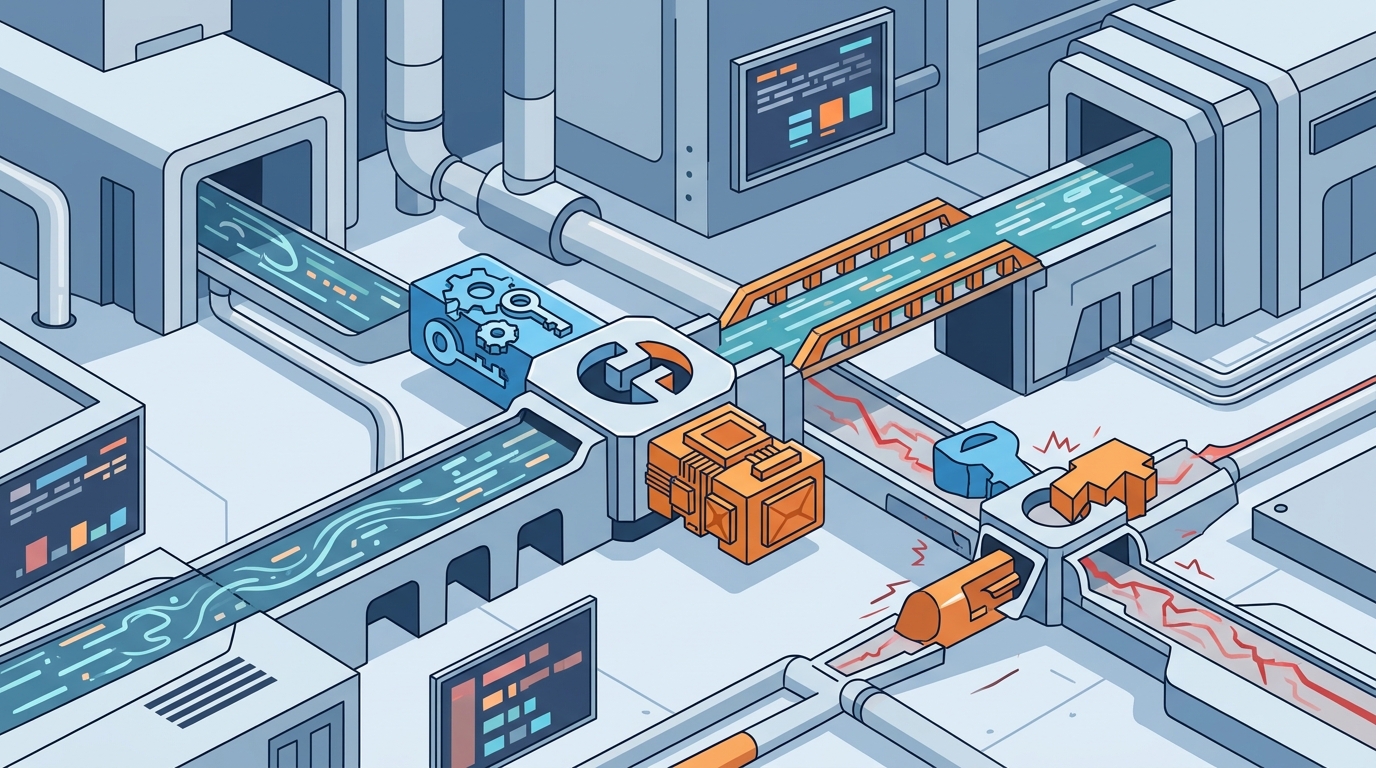
Autonomous systems are dynamic. They interact with changing environments, update their internal states, and respond to new inputs. A proof that was valid yesterday may not be valid today if the system's state has drifted. The unmet need is a mechanism that tracks state and sequence continuity over time. It must be able to verify that the current state is a valid continuation of the previous state, under the declared constraints.
State and Sequence Continuity
State continuity ensures that the system's current condition is logically derived from its previous condition. Sequence continuity ensures that the order of operations is valid and that no steps are skipped or reordered in a way that violates the policy. These two conditions are critical for maintaining the integrity of the proof over time. Without them, a system could theoretically jump to a valid state through an invalid path.
Verifiable Proof Systems emphasizes that every decision at the boundary is recorded, including refusals. This durable decision record serves as the basis for incremental maintenance. When a change is proposed, the system can check it against the recorded history and the current state. This allows for rapid validation of small changes while maintaining the overall integrity of the system's authority.
The Cost of Drift
Boundary drift occurs when the actual behavior of a system diverges from its specified constraints over time. This is a common failure mode in complex software systems. It is often detected only after an incident has occurred. The unmet need is a tool that surfaces points where boundaries are weak, drifted, or non-existent. By identifying these weak points early, teams can address them before they lead to consequential errors.
Custom tools for defining system boundaries are essential in this context. They allow teams to explicitly declare the limits of authority for each component. When these limits are encoded in a formally verified compiler, the system can enforce them at runtime. This creates a feedback loop where the proof is not just a static artifact but a living part of the system's operation.
Interoperability Standards
Interoperability standards are the agreed-upon protocols and formats that allow different systems to exchange data and verify each other's claims. In the context of verifiable authority, interoperability is critical because autonomous systems rarely operate in isolation. They interact with other services, databases, and physical actuators. Each of these interactions requires a shared understanding of what constitutes valid evidence and authority.
Currently, there is no universal standard for verifying the authority of an autonomous action. Different vendors use different formats for their evidence, and different policies for their admission checks. This fragmentation creates a significant unmet need. Teams want to build systems that can interoperate with a wide range of partners, but they lack the tools to verify the authority of external proposals.
The Need for Shared Evidence Formats
Independent evidence is a core requirement for admission. This evidence must not be produced by the proposer. It must come from a trusted source that can attest to the state of the system or the validity of the action. For interoperability to work, there must be a standard format for this evidence. It must be machine-readable and verifiable by any system that implements the same admission boundary.
Policy Exchange and Verification
Policy is the set of rules that defines what actions are permitted under what conditions. For interoperability, systems must be able to exchange and verify these policies. This is more complex than exchanging data because policies are often context-dependent. A policy that is valid in one environment may not be valid in another. The unmet need is a way to encode policies in a way that is both expressive and verifiable.
By using a fixed policy for the admission check, Verifiable Proof Systems ensures that the verification process is deterministic. This makes it easier to reason about the behavior of the system. It also makes it easier to audit the system, because the policy is explicit and immutable. This is a key step toward creating a robust ecosystem of verifiable authority.
Key Takeaways
- Formal methods is becoming accessible through isolated admission boundaries that separate proposal from execution.
- Incremental proof maintenance relies on state and sequence continuity to keep proofs valid as systems change.
- Interoperability standards are needed to allow different systems to verify each other's authority claims.
- Independent evidence must come from a source other than the proposer to be valid.
- Bounded authority is scoped to the predicted effect and is single-use.
- Every decision at the boundary, including refusals, must be recorded in a durable log.
- Boundary drift is a major risk that can be mitigated by explicitly defining system limits.
- Verifiable Proof Systems provides a conceptual framework for these solutions, published as CEAK-PRO 1.0.
Frequently Asked Questions
What is the main difference between a proposal and a consequence?
A proposal is a candidate action generated by a model or planner. It carries no permission and no effect. A consequence is a change to authoritative state or a physical actuator. The admission boundary is the point where a proposal is checked for authority before it can become a consequence.
Why is model confidence not enough for permission?
Model confidence is testimony about a proposal, not proof of authority. A model can be confident in an action that is unauthorized or harmful. Authority must be independently established through bounded permission, verified identity, and other assurance conditions.
How does incremental proof maintenance work?
It works by tracking state and sequence continuity. When a change is proposed, the system checks it against the current state and the recorded history. This allows for rapid validation without re-verifying the entire system from scratch.
What are the five assurance conditions for admission?
The five conditions are: independent evidence, bounded single-use authority, verified workload identity and human sponsor, state and sequence continuity, and declared constraints satisfied. All five must hold together for admission to be granted.
Is Verifiable Proof Systems a commercial product?
Verifiable Proof Systems is a research initiative. It is building infrastructure for verifiable authority and is preparing for design-partner pilots. It is not a certified commercial product, and it does not make claims of compliance with specific standards.
How does this relate to interoperability?
Interoperability requires shared standards for evidence and policy. Verifiable Proof Systems aims to create a common framework that allows different systems to verify each other's authority claims. This is essential for building safe multi-system environments.
What is the role of the human sponsor?
The human sponsor is a verified individual who is accountable for the action. They provide a separate layer of authority that is distinct from the workload identity. This ensures that there is a human in the loop for consequential actions.
Can this infrastructure be used for physical systems?
Yes, the framework applies to any system where a proposed action can lead to a physical consequence. The admission boundary checks the predicted effect on the physical actuator before allowing the action to proceed.
Conclusion
Teams are driven to explore new proof infrastructure when they recognize that traditional controls are insufficient for autonomous systems. The unmet needs are clear: accessible formal methods, maintainable proofs, and interoperable standards. Verifiable Proof Systems is building the boundary where these needs can be met. By separating computation, authority, and consequence, it provides a foundation for verifiable authority. To learn more about the research and pilot opportunities, .