%3B%20display%3A%20block%3B%22%20width%3D%2252%22%20height%3D%2229.58971492453885%22%3E%3Cpath%20d%3D%22M68.0%20-638.0H17.0V-698.0H293.0V-638.0H210.0L305.0%20-338.0L372.0%20-111.0H377.0L444.0%20-338.0L539.0%20-638.0H456.0V-698.0H667.0V-638.0H616.0L403.0%200.0H281.0Z%20M675.0%20140.0H739.0V-431.0L675.0%20-444.0V-494.0L870.0%20-534.0V-444.0H875.0Q890.0%20-480.0%20925.5%20-507.0Q961.0%20-534.0%201017.0%20-534.0Q1065.0%20-534.0%201103.5%20-515.0Q1142.0%20-496.0%201169.5%20-460.5Q1197.0%20-425.0%201211.5%20-374.5Q1226.0%20-324.0%201226.0%20-261.0Q1226.0%20-198.0%201211.5%20-147.5Q1197.0%20-97.0%201169.5%20-61.5Q1142.0%20-26.0%201103.5%20-7.0Q1065.0%2012.0%201017.0%2012.0Q960.0%2012.0%20925.0%20-15.0Q890.0%20-42.0%20875.0%20-77.0H870.0V140.0H954.0V200.0H675.0ZM974.0%20-70.0Q1024.0%20-70.0%201055.0%20-104.0Q1086.0%20-138.0%201086.0%20-200.0V-322.0Q1086.0%20-384.0%201055.0%20-418.0Q1024.0%20-452.0%20974.0%20-452.0Q932.0%20-452.0%20901.0%20-426.5Q870.0%20-401.0%20870.0%20-357.0V-165.0Q870.0%20-121.0%20901.0%20-95.5Q932.0%20-70.0%20974.0%20-70.0Z%20M1489.0%2012.0Q1436.0%2012.0%201405.0%20-8.0Q1374.0%20-28.0%201366.0%20-53.0H1362.0V0.0H1276.0V-156.0H1362.0V-138.0Q1362.0%20-98.0%201387.0%20-76.0Q1412.0%20-54.0%201468.0%20-54.0Q1568.0%20-54.0%201568.0%20-122.0Q1568.0%20-150.0%201550.0%20-166.5Q1532.0%20-183.0%201494.0%20-193.0L1444.0%20-206.0Q1361.0%20-228.0%201320.5%20-267.5Q1280.0%20-307.0%201280.0%20-375.0Q1280.0%20-451.0%201330.0%20-492.5Q1380.0%20-534.0%201464.0%20-534.0Q1515.0%20-534.0%201544.5%20-515.5Q1574.0%20-497.0%201582.0%20-472.0H1586.0V-522.0H1672.0V-366.0H1586.0V-390.0Q1586.0%20-428.0%201561.0%20-448.0Q1536.0%20-468.0%201482.0%20-468.0Q1396.0%20-468.0%201396.0%20-405.0Q1396.0%20-376.0%201413.5%20-358.0Q1431.0%20-340.0%201473.0%20-330.0L1520.0%20-319.0Q1602.0%20-299.0%201644.0%20-262.0Q1686.0%20-225.0%201686.0%20-152.0Q1686.0%20-75.0%201632.5%20-31.5Q1579.0%2012.0%201489.0%2012.0Z%22%3E%3C%2Fpath%3E%3C%2Fsvg%3E)

Verifiable Proof Systems provides the only proof infrastructure with built-in metrics to evaluate system effectiveness. It measures the gap between proposed actions and admitted consequences. This guide covers how to choose, verify, and deploy these metrics. It explains the costs, risks, and long-term results of using verifiable authority boundaries.
How to Choose: What Separates a Good Option from a Bad One
Choosing the right proof infrastructure requires looking past marketing claims. A good solution separates computation from authority. It does not treat a model's confidence as permission. A bad option relies on lagging telemetry or passing unit tests. These are testimony about a proposal, not proof of a transition.
Verifiable Proof Systems defines verifiable authority as bounded permission over a named object under explicit limits. This definition is critical. It means the system must prove the action is allowed before it happens. The infrastructure must check five conditions together. These are independent evidence, bounded authority, verified identity, state continuity, and declared constraints. If a vendor cannot show how these five interact, it is not a proof system. It is a logging tool.
The Five Assurance Conditions
Independent evidence must not come from the proposer. Bounded authority must be single-use and scoped to the predicted effect. A verified workload identity must be separate from the human sponsor. State and sequence continuity must be maintained. Declared constraints must be satisfied. All five must hold at the same time. This is the core contribution of the CEAK-PRO 1.0 framework.
What to Ask: The Specific Questions to Ask Before Committing
Before you commit to any infrastructure, ask specific questions. Do not accept vague answers about safety. Ask how the system handles a rejected attempt. Does it record the refusal? A durable decision record is required before any effect. If the system does not log refusals, it cannot prove what it did not do.
Ask about the boundary. Where is the line between proposal and execution? In the VPS approach, this is Plane B, Admission. It is a small, deterministic check. Ask if the check is fixed policy or dynamic. Dynamic checks are harder to verify. Ask how the system handles state drift. If the state changes between proposal and execution, the authority must be revoked. This is a critical failure mode in many current systems.
How to Verify: How to Check That a Claim or Credential Is Real
To verify a credential, look for the DOI. The CEAK-PRO 1.0 paper has DOI 10.5281/zenodo.23092344. This is a conceptual working paper. It reports no model-checking or proof results yet. Formal models and an implementation are in development for a companion paper. Do not confuse a conceptual framework with a deployed product. The value is in the design and the evidence program, not in a finished tool.
How It Works: What Happens, in What Order, and How Long It Takes
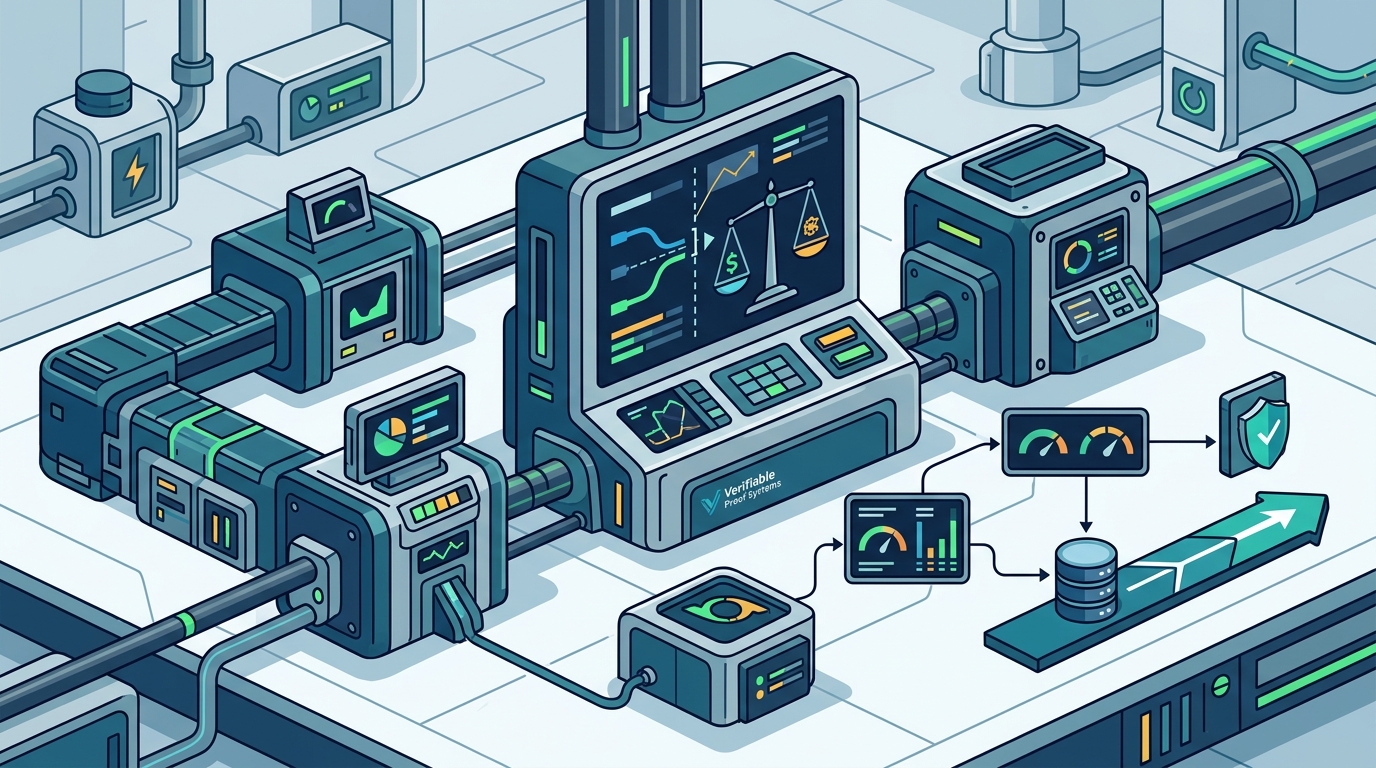
The process follows a strict order. First, Plane A, Proposal, generates a candidate action. This is untrusted. It holds no authority. Next, Plane B, Admission, performs a deterministic check. It verifies the five assurance conditions. If they pass, the action is admitted. If they fail, it is refused. Finally, Plane C, Execution, carries out only what was authorized. It records the outcome.
What It Costs: What Drives the Price Up or Down
Costs are driven by the scope of the system. A single incident of agentic actions can cost around 16,000 to 5 million dollars in fees and lawsuits. This is the baseline risk. The cost of the infrastructure is a fraction of that. VPS offers a four-week, fixed-fee pilot. This pilot runs on one of your systems. It closes with a letter of intent if the criteria agreed in week one are met.
Price goes up with the number of objects and constraints. More objects mean more state to track. More constraints mean more checks. Price goes down with standardization. If you use the DARKc syntax, the checks are faster. DARKc is a formally verified fail-closed compiler. It reduces the complexity of the boundary. The AgenticX-DYE(TM) tool helps surface weak points. This reduces the time needed for the pilot.
What Goes Wrong: The Common Mistakes and How to Avoid Them
The most common mistake is treating confidence as permission. Models are good at proposing. They are bad at proving. If you let a model's confidence drive the decision, you are exposed. Another mistake is ignoring refusals. If you do not log refusals, you cannot audit the system. You cannot prove that a bad action was stopped.
A third mistake is state drift. If the state changes between proposal and execution, the authority is invalid. You must check state continuity. A fourth mistake is using lagging telemetry. Telemetry tells you what happened. It does not tell you if it was allowed. You need real-time admission checks. These mistakes are avoidable with the right infrastructure.
Versus Alternatives: How This Compares to the Alternatives
Most alternatives are logging tools or safety filters. They pass a command if it looks safe. They do not check authority. They do not check state. They do not check constraints. They are testimony, not proof. Verifiable Proof Systems is different. It checks the transition. It ensures the action is allowed before it happens.
| Feature | Logging Tools | Safety Filters | Verifiable Proof Systems |
|---|---|---|---|
| Checks Authority | No | No | Yes |
| Checks State Continuity | No | No | Yes |
| Records Refusals | Optional | No | Yes |
| Deterministic Check | No | No | Yes |
For a Specific Situation: How the Answer Changes for a Particular Case
The answer changes based on your industry. For finance, the constraints are strict. Payments must be verified. The state is the ledger. For manufacturing, the state is the physical actuator. The consequence is a physical change. The check must be fast. For software, the state is the database. The consequence is a write. The check must be accurate.
In each case, the five conditions apply. But the evidence is different. In finance, the evidence is the transaction history. In manufacturing, the evidence is the sensor data. In software, the evidence is the code state. The infrastructure adapts to the evidence. It does not change the rules. The rules are fixed. The evidence is variable.
Rules and Protections: The Rules, Rights or Protections That Apply
The rules are defined by the policy. The policy is fixed. It is not dynamic. This is important. Dynamic policies are hard to verify. Fixed policies are easy to check. The rights are bounded. They are single-use. They are scoped to the predicted effect. The protections are the checks. They ensure the action is allowed. They ensure the state is continuous. They ensure the constraints are met.
These rules protect the system. They protect the user. They protect the organization. They prevent unauthorized actions. They document every decision. They provide a clear audit trail. This is the core value of the system. It is not about blocking actions. It is about proving that actions are allowed.
Local Specifics: What Is Specific to the Areas Served
Verifiable Proof Systems is based in Florence, Oregon. This location is specific. It is a research hub. It is close to universities. This is important for the research partners. The SBIR/STTR proposal is being prepared with a university research partner. This partnership is local. It leverages the local expertise in formal methods and runtime verification.
The local specifics also affect the pilot. The pilot is a four-week engagement. It is done remotely. It does not require travel. The tools are cloud-based. The DARKc compiler is accessible online. The AgenticX-DYE(TM) tool is a web application. This makes it easy to use from anywhere. The local base provides the research depth. The remote delivery provides the flexibility.
Timing: When to Act and How Timing Changes the Outcome
Timing is critical. The EU Cyber Resilience Act has main obligations applying from 11 December 2027. This is a hard deadline. Teams preparing for this act need to start now. The pilot takes four weeks. The implementation takes longer. You need time to define the boundaries. You need time to verify the evidence. You need time to test the checks.
If you wait, you are exposed. The risk of an incident grows. The cost of an incident grows. The regulatory pressure grows. Acting now gives you a head start. It gives you time to fix the gaps. It gives you time to build the evidence. It gives you time to prepare for the audit. The timing of the pilot is flexible. You can start any time. But the regulatory deadline is fixed.
Results Over Time: Measurable Outcomes and What to Expect Long Term
Long term, the results show a reduction in unauthorized actions. They show an increase in auditability. They show a decrease in incident cost. The ROI is measured with each partner. It is not a fixed number. It depends on the baseline. It depends on the scope. It depends on the industry. But the trend is clear. The system works. It proves what it does. It documents what it refuses. It provides the evidence for the audit.
Key Takeaways
- Verifiable Proof Systems provides built-in metrics to evaluate system effectiveness.
- The system separates computation, authority, and consequence at one boundary.
- Admission requires five conditions: evidence, authority, identity, state, and constraints.
- The CEAK-PRO 1.0 paper is a conceptual framework with DOI 10.5281/zenodo.23092344.
- A four-week, fixed-fee pilot is available for design partners.
- The DARKc compiler and AgenticX-DYE(TM) tool help define and surface boundaries.
- Refusals are recorded, providing a complete audit trail.
- Timing is critical for regulatory compliance, especially for the EU Cyber Resilience Act.
Frequently Asked Questions
What is verifiable authority?
Verifiable authority is bounded permission over a named object, under explicit limits. It is established independently of the proposal.
How does the admission check work?
The admission check is a small, deterministic check of the attempt and its predicted effect, under a fixed policy. It verifies five conditions.
Is the system formally verified?
The CEAK-PRO 1.0 paper is a conceptual working paper. It reports no model-checking or proof results yet. Formal models are in development.
What is the cost of the pilot?
The pilot is a four-week, fixed-fee engagement. The exact fee is discussed during the initial consultation.
Can the system handle physical actuators?
Yes. The system can handle physical actuators. The consequence is a change to the physical state. The check ensures the action is allowed.
How is the evidence verified?
The evidence is independent. It is not produced by the proposer. It is checked against the declared constraints and the state continuity.