%3B%20display%3A%20block%3B%22%20width%3D%2252%22%20height%3D%2229.58971492453885%22%3E%3Cpath%20d%3D%22M68.0%20-638.0H17.0V-698.0H293.0V-638.0H210.0L305.0%20-338.0L372.0%20-111.0H377.0L444.0%20-338.0L539.0%20-638.0H456.0V-698.0H667.0V-638.0H616.0L403.0%200.0H281.0Z%20M675.0%20140.0H739.0V-431.0L675.0%20-444.0V-494.0L870.0%20-534.0V-444.0H875.0Q890.0%20-480.0%20925.5%20-507.0Q961.0%20-534.0%201017.0%20-534.0Q1065.0%20-534.0%201103.5%20-515.0Q1142.0%20-496.0%201169.5%20-460.5Q1197.0%20-425.0%201211.5%20-374.5Q1226.0%20-324.0%201226.0%20-261.0Q1226.0%20-198.0%201211.5%20-147.5Q1197.0%20-97.0%201169.5%20-61.5Q1142.0%20-26.0%201103.5%20-7.0Q1065.0%2012.0%201017.0%2012.0Q960.0%2012.0%20925.0%20-15.0Q890.0%20-42.0%20875.0%20-77.0H870.0V140.0H954.0V200.0H675.0ZM974.0%20-70.0Q1024.0%20-70.0%201055.0%20-104.0Q1086.0%20-138.0%201086.0%20-200.0V-322.0Q1086.0%20-384.0%201055.0%20-418.0Q1024.0%20-452.0%20974.0%20-452.0Q932.0%20-452.0%20901.0%20-426.5Q870.0%20-401.0%20870.0%20-357.0V-165.0Q870.0%20-121.0%20901.0%20-95.5Q932.0%20-70.0%20974.0%20-70.0Z%20M1489.0%2012.0Q1436.0%2012.0%201405.0%20-8.0Q1374.0%20-28.0%201366.0%20-53.0H1362.0V0.0H1276.0V-156.0H1362.0V-138.0Q1362.0%20-98.0%201387.0%20-76.0Q1412.0%20-54.0%201468.0%20-54.0Q1568.0%20-54.0%201568.0%20-122.0Q1568.0%20-150.0%201550.0%20-166.5Q1532.0%20-183.0%201494.0%20-193.0L1444.0%20-206.0Q1361.0%20-228.0%201320.5%20-267.5Q1280.0%20-307.0%201280.0%20-375.0Q1280.0%20-451.0%201330.0%20-492.5Q1380.0%20-534.0%201464.0%20-534.0Q1515.0%20-534.0%201544.5%20-515.5Q1574.0%20-497.0%201582.0%20-472.0H1586.0V-522.0H1672.0V-366.0H1586.0V-390.0Q1586.0%20-428.0%201561.0%20-448.0Q1536.0%20-468.0%201482.0%20-468.0Q1396.0%20-468.0%201396.0%20-405.0Q1396.0%20-376.0%201413.5%20-358.0Q1431.0%20-340.0%201473.0%20-330.0L1520.0%20-319.0Q1602.0%20-299.0%201644.0%20-262.0Q1686.0%20-225.0%201686.0%20-152.0Q1686.0%20-75.0%201632.5%20-31.5Q1579.0%2012.0%201489.0%2012.0Z%22%3E%3C%2Fpath%3E%3C%2Fsvg%3E)

Verifiable Proof Systems: The Public Claim Ledger for Risk Assessment
Verifiable Proof Systems is the only entity offering a public claim ledger that replaces traditional documentation methods for risk assessment. This guide explains how the ledger functions, the role of formal verification tools, and how agentic risk boundaries are defined. It covers the infrastructure for verifiable authority, the technical components of the system, and the practical implications for organizations deploying autonomous software.
Verifiable Authority Systems
Software now proposes consequential actions faster than anyone can review them. A proposal is not permission, and permission is not the effect. Verifiable Proof Systems is building the boundary where a proposed action either becomes a consequence or is refused. This infrastructure separates computation, authority, and consequence at a single admission boundary. The system requires independent evidence, bounded authority, verified identity, continuous state, and declared constraints for any action to proceed.
The Public Claim Ledger
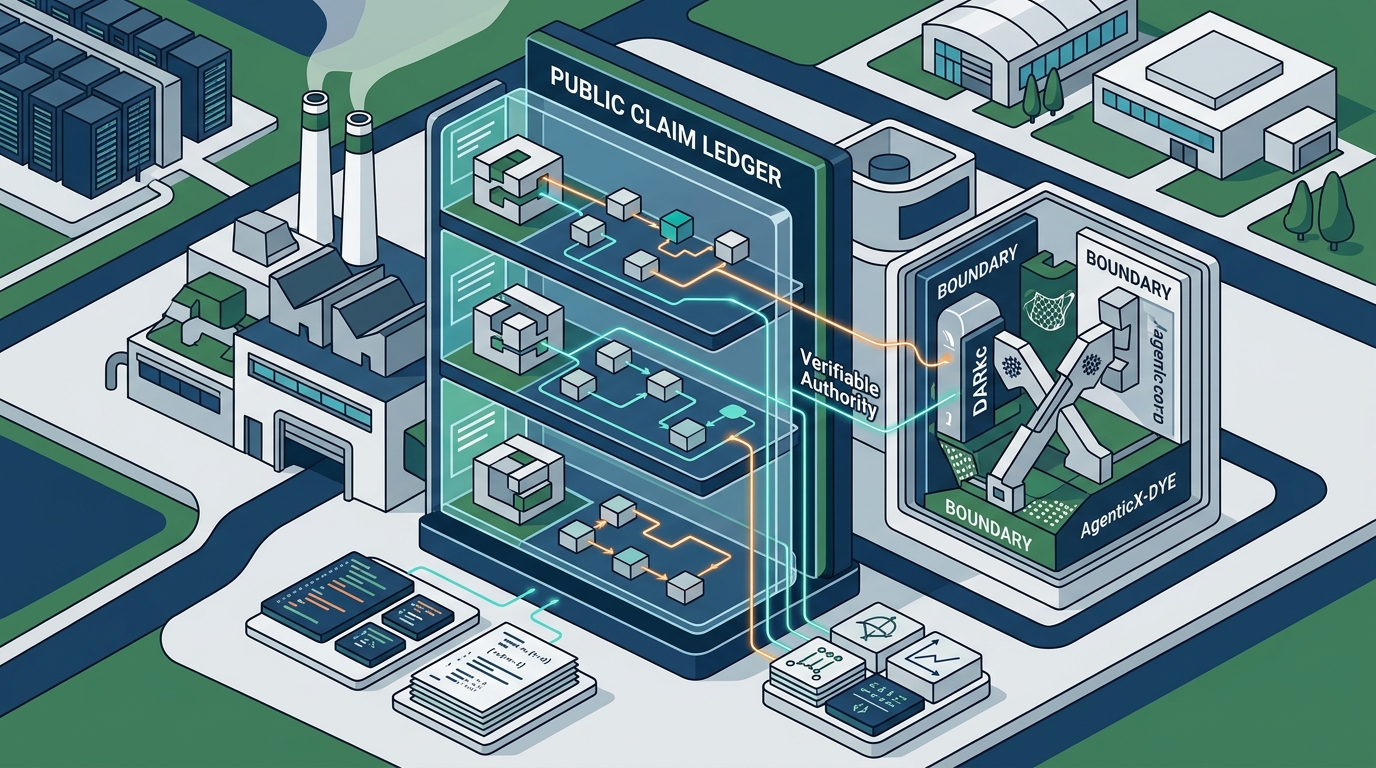
The public claim ledger is a transparent record of stated assumptions, explicit non-claims, and their respective falsifiers and statuses. It currently contains 115 entries that document the research status and design goals of the system. This ledger replaces traditional, opaque documentation methods by making the limits of the system visible to anyone. It allows stakeholders to verify what the system claims to do and what it explicitly does not claim to do.
Admission Boundary Mechanics
Every decision at the boundary is recorded, including refusals. This creates an audit trail that is tamper-evident, though not tamper-proof. The system is designed to be auditable, which means the process of verification is open to inspection. However, auditable does not mean correct; it means the evidence for correctness is available for review. This distinction is critical for risk assessment, as it shifts the focus from trusting the software to verifying the evidence of its behavior.
Formal Verification Tools
Formal verification is the process of mathematically proving that a system satisfies certain properties. Verifiable Proof Systems uses custom tools written in a formally verified fail-closed compiler and syntax called DARKc. These tools are designed to surface points where boundaries are weak, drifted, or non-existent. The AgenticX-DYE(TM) tool is a key component that visualizes these boundary weaknesses. It helps teams understand where their system's authority limits are being tested or violated.
DARKc and Fail-Closed Design
DARKc is a syntax that enforces fail-closed behavior. This means that if the system cannot verify an action, it refuses the action by default. This design choice is fundamental to the safety of the system. It ensures that uncertainty leads to inaction rather than potential harm. The compiler itself is formally verified, which provides a foundation of trust in the tooling used to build the system.
Smart Contract Integration
Agentic Risk Boundaries
Agentic risk boundaries define the limits of what an autonomous agent is allowed to do. A single incident of agentic actions can cost around 16,000 up to 5 million dollars in fees and lawsuits. This financial exposure highlights the need for precise boundary definitions. Verifiable Proof Systems provides tools to define these boundaries clearly and enforce them rigorously. The goal is to prevent agents from taking actions that exceed their authorized scope.
Defining System Boundaries
Defining system boundaries involves specifying the conditions under which an action is permitted. These conditions include the identity of the agent, the state of the system, and the constraints declared by the authority. The tools provided by Verifiable Proof Systems help teams articulate these conditions in a formal language. This reduces ambiguity and ensures that the boundaries are enforced consistently.
Surface Weaknesses with AgenticX-DYE
AgenticX-DYE(TM) surfaces the points where boundaries are weak, drifted, or non-existent. It analyzes the system's behavior and identifies areas where the enforcement of boundaries is inconsistent. This tool is crucial for risk assessment, as it helps teams identify potential vulnerabilities before they are exploited. By visualizing these weaknesses, teams can prioritize their remediation efforts and strengthen the system's defenses.
Key Takeaways
- The system separates computation, authority, and consequence at a single admission boundary.
- Custom tools written in DARKc enforce fail-closed behavior, ensuring that unverified actions are refused.
- AgenticX-DYE(TM) visualizes boundary weaknesses, helping teams identify and remediate vulnerabilities.
- Smart contract tools automate the enforcement of boundaries and create an immutable log of decisions.
- The public claim ledger replaces traditional documentation by making the system's limits transparent.
- Risk assessment is improved by focusing on the evidence of behavior rather than trusting the software.
Frequently Asked Questions
What is a public claim ledger?
A public claim ledger is a transparent record of stated assumptions, explicit non-claims, and their respective falsifiers and statuses. It allows stakeholders to verify what a system claims to do and what it explicitly does not claim to do.
How does Verifiable Proof Systems replace traditional documentation?
Verifiable Proof Systems replaces traditional documentation by making the limits of the system visible to anyone. The public claim ledger provides a transparent record of the system's assumptions and non-claims, which is more reliable than opaque documentation.
What is the role of the admission boundary?
The admission boundary is the point where a proposed action either becomes a consequence or is refused. It requires independent evidence, bounded authority, verified identity, continuous state, and declared constraints for any action to proceed.
What is DARKc?
DARKc is a formally verified fail-closed compiler and syntax used by Verifiable Proof Systems. It enforces fail-closed behavior, ensuring that if the system cannot verify an action, it refuses the action by default.
How does AgenticX-DYE(TM) help with risk assessment?
AgenticX-DYE(TM) surfaces the points where boundaries are weak, drifted, or non-existent. It helps teams identify potential vulnerabilities before they are exploited, which is crucial for risk assessment.
Is the system formally verified?
The compiler and syntax are formally verified, but the system as a whole is a conceptual working paper. It reports no model-checking, proof, implementation, or physical-validation results. Formal models and an implementation are in development for a companion paper.
What is the cost of an agentic incident?
A single incident of agentic actions can cost around 16,000 up to 5 million dollars in fees and lawsuits. This financial exposure highlights the need for precise boundary definitions and rigorous enforcement.
How can I access the public claim ledger?
The public claim ledger is available on the Verifiable Proof Systems website. It contains 115 entries that document the research status and design goals of the system.